
Fences Leaning Before Their Time
Tilting Fences in Greater Birmingham for properties where fence posts are shifting, heaving, or pulling away from vertical due to soil and drainage conditions
Fence posts that are leaning, twisting, or pulling out of plumb before the fence has reached the end of its expected service life are signaling a condition in the soil around the post base—not a defect in the fence material itself. Alabama Drainage Professionals works with Greater Birmingham homeowners to identify the drainage and soil saturation conditions responsible for fence post failure and to correct those conditions so that replacement posts hold correctly. Installing new posts into the same waterlogged or unstable soil without correcting what caused the original failure repeats the same outcome.
Post movement in saturated soil follows a predictable pattern: when the soil around a post base remains wet for extended periods, it loses the bearing capacity that holds the post plumb under lateral load from the fence panels and wind. The post begins to rotate at the soil line rather than staying fixed, producing the visible lean. In many Greater Birmingham neighborhoods where lots are relatively flat and surface drainage is slow to exit the yard, fence lines installed along low-lying property boundaries sit in chronically wet ground that never fully firms between rain events, accelerating post movement regardless of how deep the original installation was.
Schedule an evaluation to assess the drainage conditions along your fence line before reinstallation work begins.
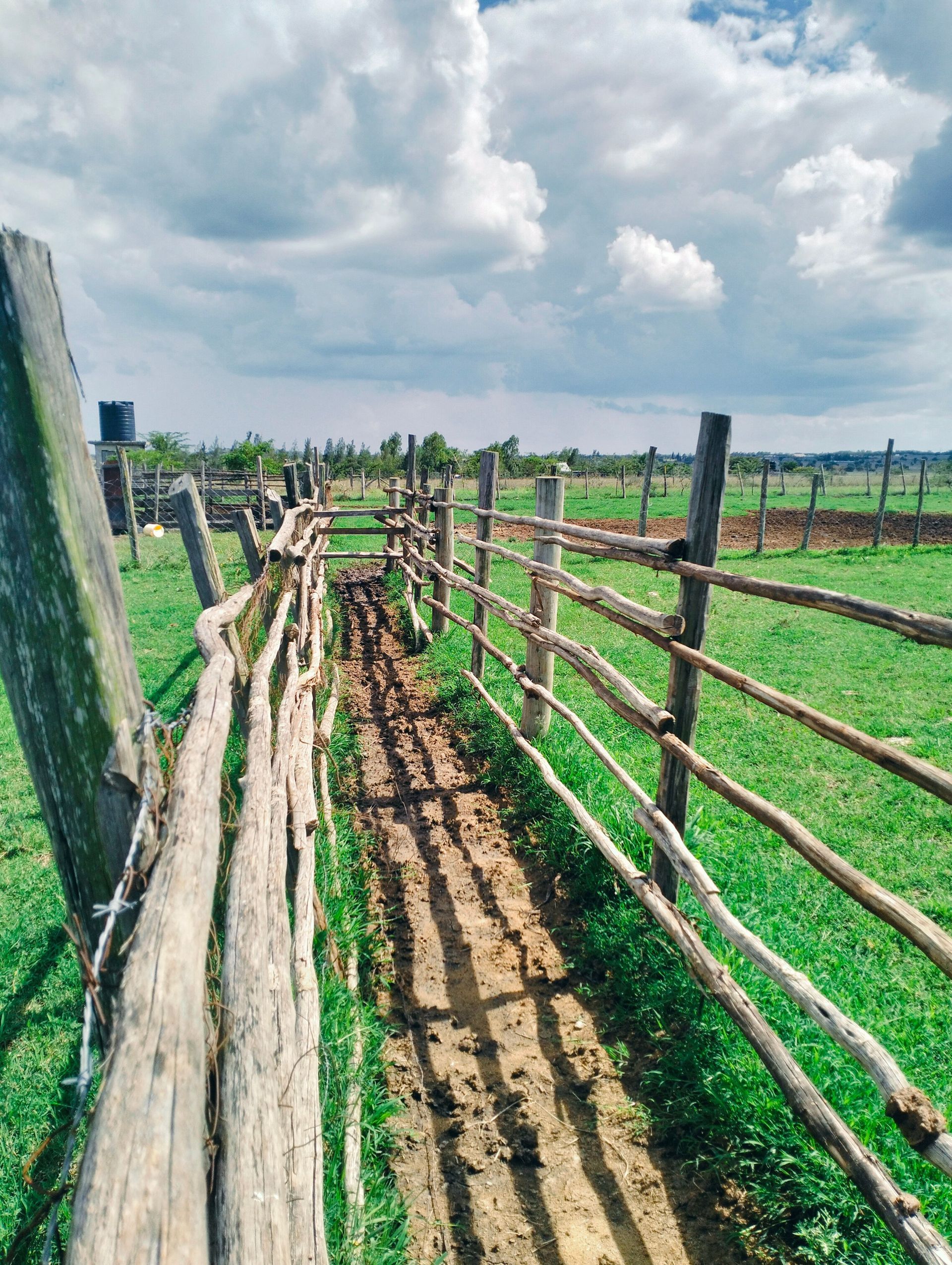
The Difference Between a Post Problem and a Drainage Problem
Distinguishing post failure caused by drainage from post failure caused by installation depth or concrete quality requires examining the soil condition around the failed posts rather than just the posts themselves. Posts that pull straight out with minimal resistance and show waterlogged soil at the base have failed because of saturation undermining bearing capacity. Posts that snap at the soil line or show rot at the base have failed because of prolonged contact with moisture that was never able to drain away from the post. Both patterns point to drainage correction as the necessary first step, but each involves a different correction approach—surface grading and channel work for the first, subsurface drainage aggregate around the post zone for the second.
After drainage corrections are in place along the fence line, the soil firms to a condition that holds post concrete at consistent bearing capacity through rain events. New posts installed into corrected soil stay plumb through the fence's intended service life rather than beginning to shift within the first few years. Alabama Drainage Professionals verifies that surface water is exiting the fence line area and that no low points are collecting water against post bases before recommending reinstallation.
The slope and orientation of a fence line relative to the natural grade of the property determines which drainage approach applies. A fence running across a slope intercepts sheet flow and may need channel work on the uphill side to prevent water from ponding against post bases. A fence running with the slope along a low point may need subsurface drainage to manage water that moves through the soil rather than across the surface. Neither situation is unusual in Greater Birmingham's varied residential topography.
Answers About How the Work Is Done
Post movement and fence leaning generate specific questions about how drainage evaluation and correction interact with fence reinstallation. The questions below address what the process involves and what property owners can expect during and after the work.
How does the evaluation determine whether fence post failure is a drainage problem?
The evaluation examines soil moisture at the post base, the pattern of which posts have failed relative to low points and flow paths on the lot, and whether post concrete is still intact or has displaced—saturation-related failures produce consistent patterns tied to where water collects rather than random failures spread across the fence line.
What drainage work is typically required along a fence line before reinstallation?
Depending on the cause of saturation, the work may involve regrading the immediate area to direct surface flow away from the fence line, installing a French drain parallel to the fence to intercept subsurface water, or both—the correct approach depends on whether water is arriving at the post zone from the surface or moving through the soil profile.
Why does concrete around fence posts fail to prevent leaning when soil is saturated?
Concrete anchors a post by transferring lateral load into the surrounding soil—when that soil is saturated and has low bearing capacity, the concrete and post move together rather than staying fixed, so the mass of concrete around the base does not compensate for the soil's inability to resist the force.
How do low-lying fence lines in Greater Birmingham's flat residential lots differ from fence lines on sloped ground?
Flat lots concentrate surface runoff in low-lying boundary areas where it exits slowly, keeping fence post zones wet for longer periods after rain events than sloped lots where water moves off more quickly—the correction for flat lots typically emphasizes surface outlet grading or subsurface drainage rather than channel interception.
What does properly drained soil around a fence post look like after correction?
The soil surface adjacent to post bases dries to a walkable firmness within a normal period after rain, standing water no longer collects against the fence line, and the post concrete maintains consistent resistance when load is applied laterally—all indicators that bearing capacity is stable.
Alabama Drainage Professionals identifies drainage conditions along fence lines across Greater Birmingham and outlines what correction is needed before new posts are set. Contact Alabama Drainage Professionals to arrange a fence line drainage evaluation.