
Mud Deposits That Keep Returning After Rain
Silt and Mud Accumulation in Greater Birmingham for properties where sediment collects in driveways, beds, and low-lying areas after storm events
Silt and mud that reappear in the same locations after every rain event are the visible signature of uncontrolled surface water carrying fine particles from higher ground and depositing them wherever flow velocity drops. Alabama Drainage Professionals addresses sediment accumulation problems in Greater Birmingham by identifying the source slopes, flow paths, and deposition zones that generate recurring mud buildup on driveways, in planting beds, against foundation edges, and across low-lying yard areas. The pattern of where sediment lands tells as much about the problem as the source slope itself.
Controlling silt and mud accumulation requires interrupting the flow path before sediment reaches its deposition point—not cleaning up after it arrives. This means evaluating upslope conditions to identify where soil is exposed or where runoff is concentrating, then determining what combination of grade correction, flow interception, and surface stabilization will reduce the velocity and volume of water carrying sediment across the property. In many parts of Greater Birmingham, residential lots back up to cut slopes or share drainage paths with adjacent properties, which means sediment sources are sometimes off-site and require interception strategies rather than source control.
Arrange a site evaluation to map the flow paths contributing to sediment deposits on your property.
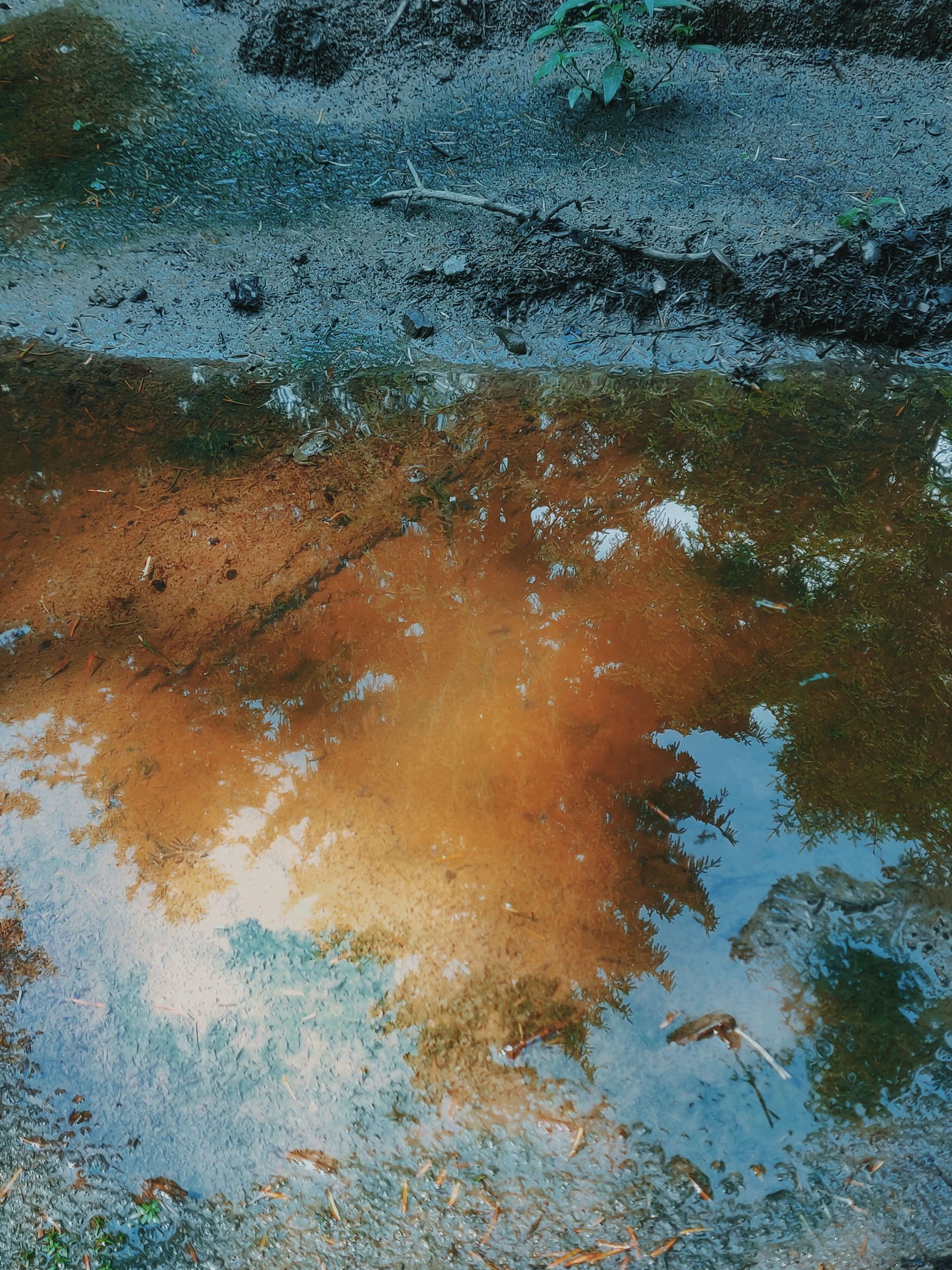
How Drainage Correction Addresses Sediment Flow
Addressing silt accumulation begins with identifying the full travel path of water from its entry point onto the property to where it finally slows enough to drop its sediment load. Interceptor drains, berms, and redirected channels reduce flow velocity before it reaches problem deposition zones. In cases where sediment arrives from adjacent slopes or shared drainage corridors—common in subdivisions built into Greater Birmingham's hilly terrain during the postwar development period—the interception point needs to be positioned at the property boundary rather than inside the affected yard area.
After drainage corrections are installed, the observable change is a clean surface after rain events where mud deposits previously appeared. Driveways that required hosing down after every storm remain clean, and planting beds no longer require sediment removal before each growing season. The correction also eliminates the secondary problem of mud tracking into structures from sediment-covered walkways and entry areas, which is typically the complaint that prompts homeowners to seek a drainage solution in the first place.
Alabama Drainage Professionals also evaluates whether existing landscaping or hardscape features are inadvertently concentrating flow and increasing the sediment load. Retaining walls without adequate drainage behind them, for instance, can redirect subsurface water to the surface and add to the sediment volume arriving at low points. Solving silt accumulation comprehensively means accounting for all the contributing factors rather than addressing only the most visible deposit location.
Common Questions About This Service
Silt and mud accumulation problems often involve more than one source and more than one correction approach. The questions below explain how this type of drainage work is scoped and what property owners can expect from the process.
What causes silt to deposit in the same spots repeatedly?
Sediment drops out of moving water wherever flow velocity decreases—at grade transitions, flat areas, or where flow spreads out after being channeled—so recurring deposits in a fixed location indicate a consistent flow path delivering sediment to a predictable low-velocity zone.
How does the evaluation determine where sediment is coming from?
The evaluation traces flow paths upslope from each deposition zone during dry conditions, identifying exposed soil, disturbed ground, or concentrated runoff channels that are generating and transporting sediment to the deposit location.
Why does sediment accumulation often worsen after landscaping or grading changes nearby?
New grading or vegetation removal on adjacent lots or upslope areas exposes bare soil and increases runoff velocity, which delivers higher sediment loads to downstream properties even when nothing on the affected property has changed.
What does properly intercepted sediment flow look like once corrections are in place?
Interception drains capture sediment-laden water before it reaches deposit zones, and cleanout access points built into the system allow accumulated material to be removed periodically rather than letting it travel further onto the property.
How do Greater Birmingham's cut slopes affect sediment management for residential lots?
Many residential lots in hilly sections of the area were graded by cutting into slopes and using the material as fill elsewhere, leaving exposed cut faces that shed fine particles continuously—intercepting flow at these cut faces rather than at the base of the slope produces more durable results.
Alabama Drainage Professionals can identify all contributing flow paths and outline a correction plan specific to your property's sediment problem. Request a site visit to begin the evaluation process.