
Sediment Contained Before It Leaves the Site
Silt Fencing Installation in Greater Birmingham for construction sites, land disturbance projects, and graded areas where unprotected soil moves toward storm drains, waterways, or adjacent properties
Disturbed soil on a sloped site moves quickly once protective cover is gone—and on active grading projects, that exposed material can reach storm drain inlets, property lines, and waterways before the next phase of construction begins. Alabama Drainage Professionals installs silt fencing across Greater Birmingham as a first-line sediment control measure on residential and commercial projects, positioning and entrenching fence lines so they intercept sheet flow downslope and hold sediment behind the fabric. The measure sounds simple but its effectiveness depends almost entirely on how it is installed: a surface-staked silt fence provides almost no functional sediment control, while a properly entrenched installation with posts at correct spacing intercepts real flow volumes and holds up through multiple significant rain events.
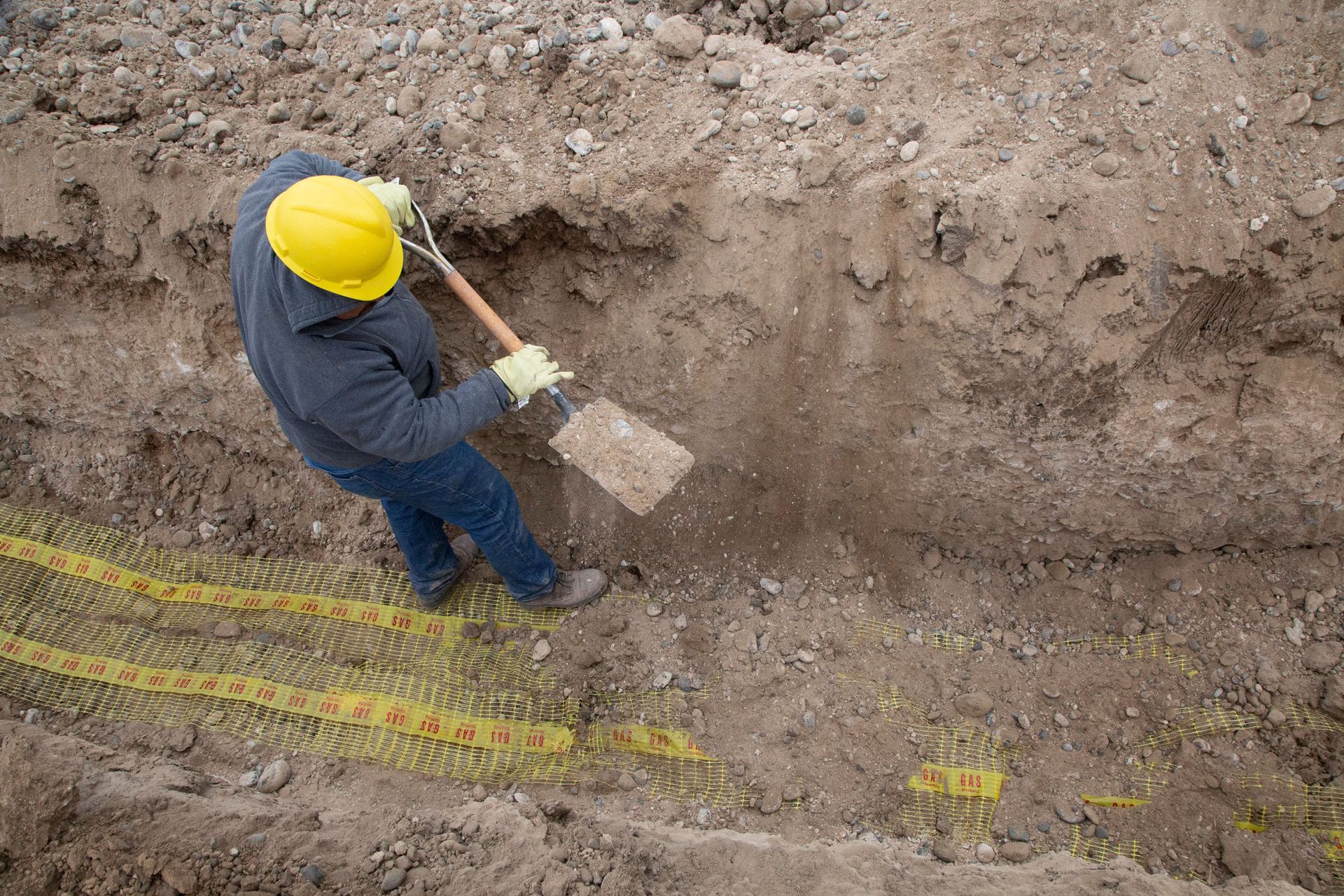
Installation involves staking fence posts at intervals suited to the expected flow and slope gradient, cutting a trench along the toe of the fence line, folding the base of the fabric into the trench, backfilling and compacting the trench to seal the bottom edge, and securing the fabric to the posts so it cannot sag or gap along the upper edge. Alabama Drainage Professionals maps the natural drainage direction across the disturbed area before placing the fence line—silt fence positioned across drainage flow rather than parallel to it is the functional configuration, and misreading the drainage pattern is one of the most common reasons installed silt fence fails to perform.
Arrange an on-site evaluation to confirm drainage direction and identify where silt fence placement will intercept flow before sediment reaches protected areas or off-site boundaries.
Why Silt Fence Fails and How Correct Installation Prevents It
Silt fence fabric is rated by its flow-through rate and sediment retention efficiency, but those ratings assume the fence is installed correctly—which means the toe of the fabric is buried in a compacted trench, not pinned to the surface. When water undercuts the fence, it carries its full sediment load directly under the barrier, making the installed fence functionally invisible to the flow. Post spacing also matters: posts set too far apart allow the fabric to belly outward under hydrostatic pressure from accumulated water, which opens the bottom seal and again creates an undercut path. Alabama Drainage Professionals installs silt fence to functional standards rather than minimal material standards, because a fence line that fails at the first significant rain event requires full reinstallation and leaves the site unprotected during the interval between installation and repair.
Once correctly installed, a silt fence line produces a visible and measurable result: sediment accumulates behind the fabric in a defined zone rather than washing off-site, and the downslope boundary of the disturbed area remains clean. On sites subject to regulatory inspection—any Alabama construction project disturbing one acre or more falls under state and federal stormwater permitting requirements—a silt fence line that is installed and maintained correctly is a documented Best Management Practice that supports compliance rather than a paperwork exercise.
Silt fence is a temporary measure with a finite service life tied to the volume of sediment it accumulates. A fence that has trapped sediment to within one-third of its height is no longer functioning at capacity and requires either cleanout or replacement before the next rain event. On phased projects, fence lines may need to be relocated as disturbance areas expand or construction access points change—those transitions are planned as part of the overall sediment control layout rather than handled reactively when a fence line is overwhelmed.
Answers About How the Work Is Done
Silt fencing projects in Greater Birmingham vary based on site slope, disturbance area, and the proximity of storm drain infrastructure and waterways. These questions address what drives installation decisions and how performance is maintained.
How is the correct location for a silt fence line determined on a site?
The fence is placed on the downslope perimeter of the disturbed area, oriented perpendicular to the direction of sheet flow so that runoff moving across the site reaches the fence rather than flowing alongside it—installing fence parallel to flow direction provides no interception and leaves downslope areas unprotected.
What is the correct method for entrenching silt fence fabric?
A trench approximately six inches deep and six inches wide is cut along the fence alignment, the bottom of the fabric is folded into the trench at roughly a ninety-degree angle toward the upslope side, and the trench is backfilled with compacted soil so that the fabric toe is sealed against the ground and cannot be undercut by sheet flow.
How do construction conditions on Greater Birmingham sites affect silt fence placement?
Many active development sites in this area involve grading across multiple drainage subsheds simultaneously, which requires separate fence lines for each drainage path rather than a single perimeter line—mapping those drainage divides before installation ensures each flow path is intercepted independently and none bypasses the installed controls.
When does a silt fence need to be replaced rather than repaired during a project?
When sediment accumulation behind the fence reaches one-third of the fabric height, the storage capacity is functionally exhausted and the fence cannot detain additional sediment—at that point the sediment should be removed or the fence line relocated upslope to restore functional capacity before the next significant rainfall.
What additional measures work alongside silt fence to improve overall sediment control?
Silt fence handles sheet flow across the downslope perimeter, but concentrated flow in swales or channels will blow through a fabric fence—check dams in drainage channels, inlet protection at storm drain structures, and a stabilized construction entrance to reduce tracked sediment are typically installed alongside silt fence as part of a complete sediment control system.
Alabama Drainage Professionals installs silt fencing as a standalone measure or as part of a broader erosion and sediment control plan for projects across Greater Birmingham. Contact Alabama Drainage Professionals to discuss your site's disturbance area, drainage pattern, and the fencing layout that will keep sediment on-site through each phase of your project.